Hunger
Your Sim needs regular meals to stay nourished.
Try: Cooking, eating leftovers, or grabbing a quick meal.
Where every Sim story begins with inspiration.
THE WANDERING WHIMS BEGINNER'S LIBRARY
Every Sim has needs, feelings, and experiences that influence their daily life. Learn how to care for your Sims, understand their emotions, and help them enjoy each new adventure.
✧ BASE GAME ONLY · BEGINNER FRIENDLY ✧
PART ONE
Needs are essential parts of everyday gameplay. Your Sims need food, rest, hygiene, entertainment, social interaction, and bathroom breaks.
Ordinary Teen and older human Sims have six standard needs.
Your Sim needs regular meals to stay nourished.
Try: Cooking, eating leftovers, or grabbing a quick meal.
Energy represents how well rested your Sim is.
Try: Sleeping in a bed or taking a nap.
Your Sim needs access to a toilet.
Try: Using the bathroom before long outings.
Hygiene represents personal cleanliness.
Try: Taking a shower or bath.
Sims need opportunities to relax and enjoy life.
Try: Games, television, music, or hobbies.
Social represents your Sim's need for connection.
Try: Talking with friends, family, or neighbors.
Your Sim does not need every need completely full all the time. The goal is to recognize problems and respond before they become too serious.
PART TWO
In Live Mode, select your Sim and open the Needs panel in the lower-right area of the game interface.
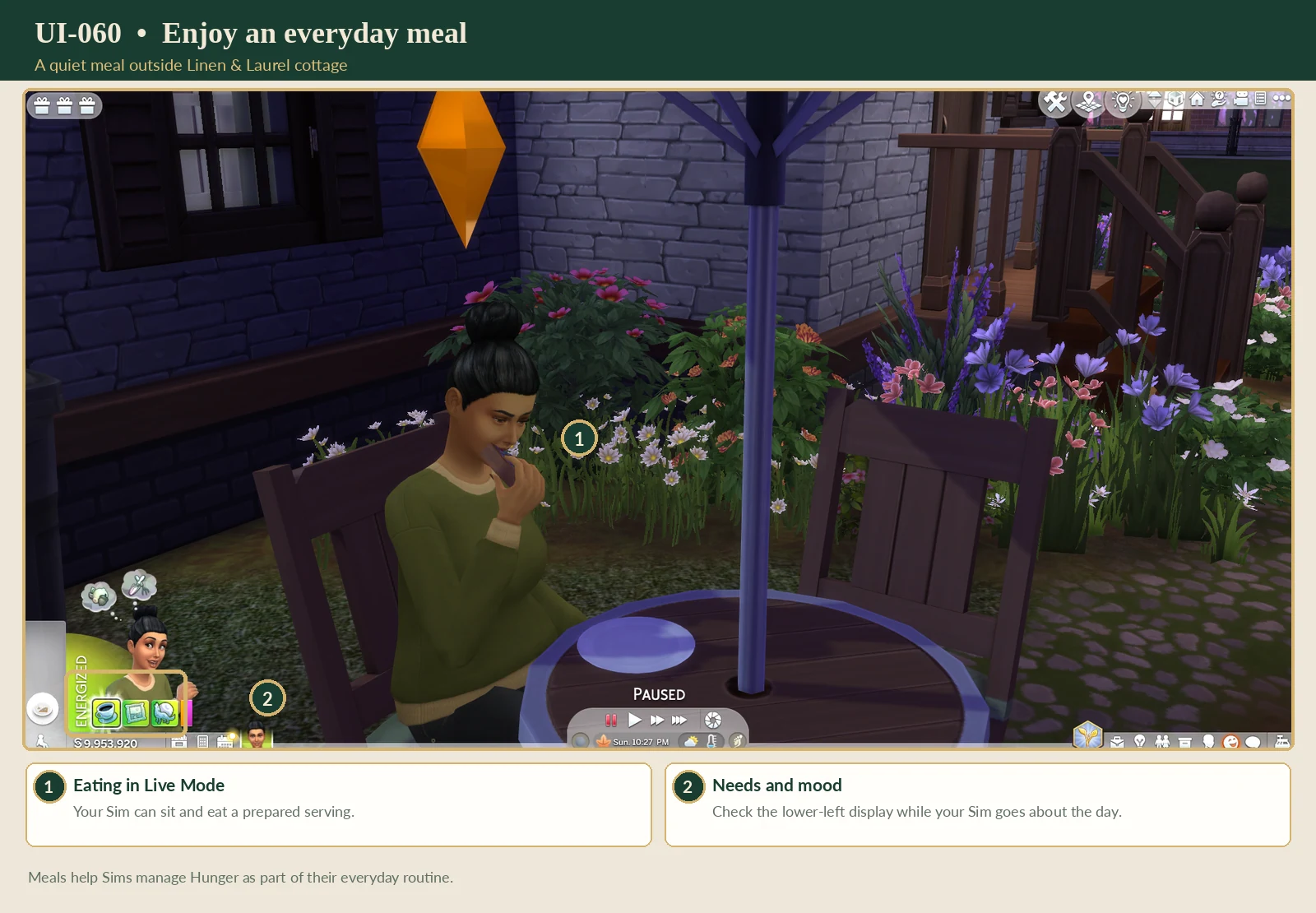
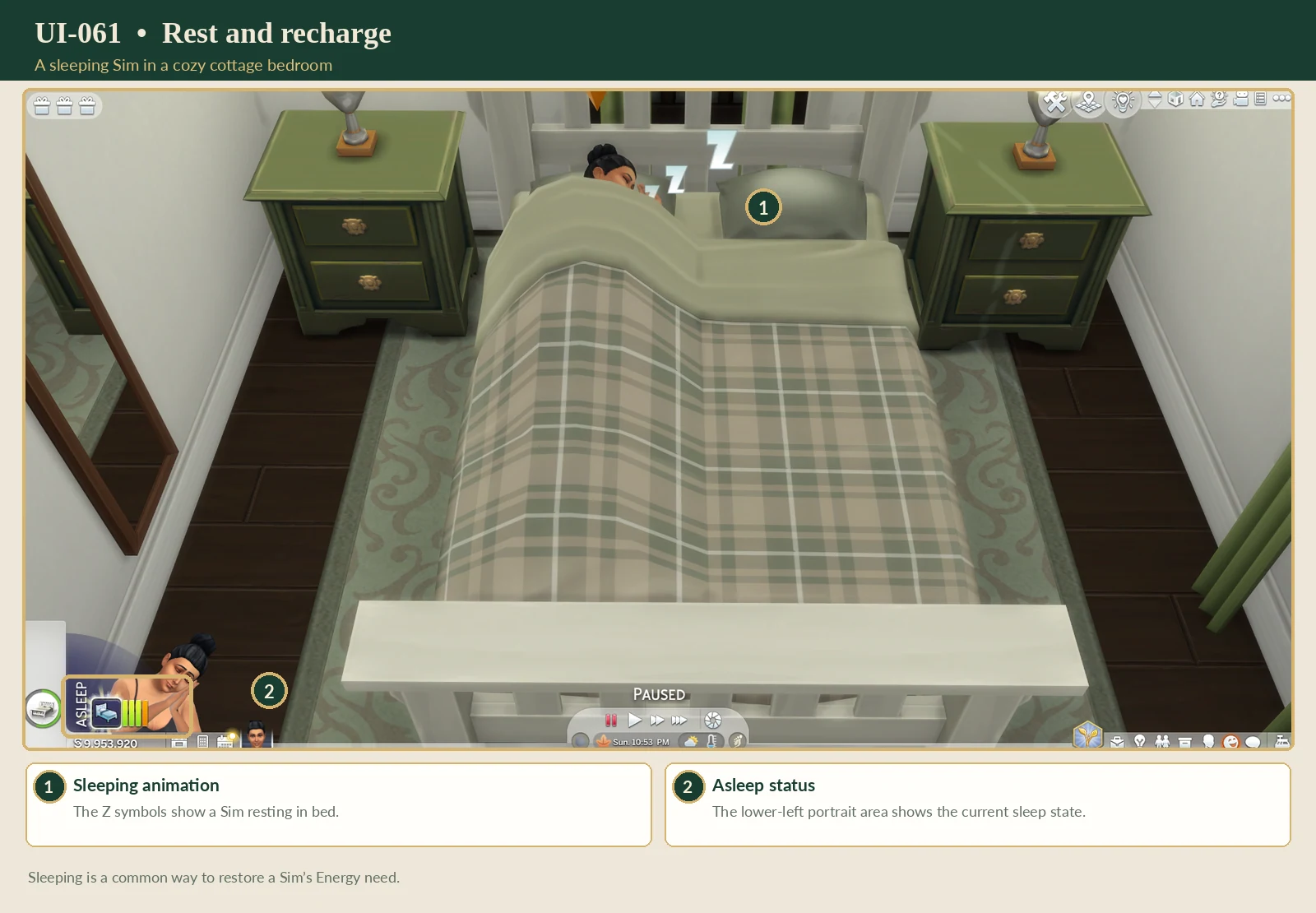
The six standard needs and basic actions are Base Game features. Interface appearance may differ by game version.
Each need is represented by a colored bar.
The need is relatively well satisfied.
The need is becoming low and should be monitored.
The need is critically low and requires attention.
Needs generally decrease with time and activities. Different needs can fall at different rates.
Low needs may interfere with everyday activities and create uncomfortable emotions.
Check the Needs panel before sending your Sim to work, school, or a long outing. A little preparation can make their day much easier.
PART THREE
Most needs can be restored through everyday activities and household objects.
| Need | Helpful Activities |
|---|---|
| Hunger | Cook, eat leftovers, or have a quick meal. |
| Energy | Sleep in a bed or take a nap. |
| Bladder | Use a toilet. |
| Hygiene | Shower or bathe. |
| Fun | Watch television, play games, or pursue enjoyable hobbies. |
| Social | Have conversations or spend time with other Sims. |
Your Sim may be able to satisfy several needs at once.
For example, eating a meal while chatting with another Sim may help both Hunger and Social.
Sims may also respond differently to activities based on their traits, Likes and Dislikes, and current situation.
PART FOUR
Emotions represent how your Sim currently feels.
Your Sim's current emotion appears near their portrait in Live Mode.
Emotions can influence available interactions, behavior, social experiences, and certain skills.
Feeling content or pleased.
A useful mood for creative activities.
Helpful for some mental activities.
A mood that can support certain social interactions.
Feeling lighthearted and amused.
Feeling down after difficult experiences.
Feeling stressed or frustrated.
Feeling physically or environmentally uncomfortable.
Sims can experience many other emotions, including Angry, Energized, Flirty, Embarrassed, Bored, and Dazed.
Your Sim's emotions can help inspire their story. Perhaps a nervous new arrival slowly becomes confident as they make friends and build a home.
PART FIVE
Moodlets are temporary effects that help determine your Sim's emotional state.
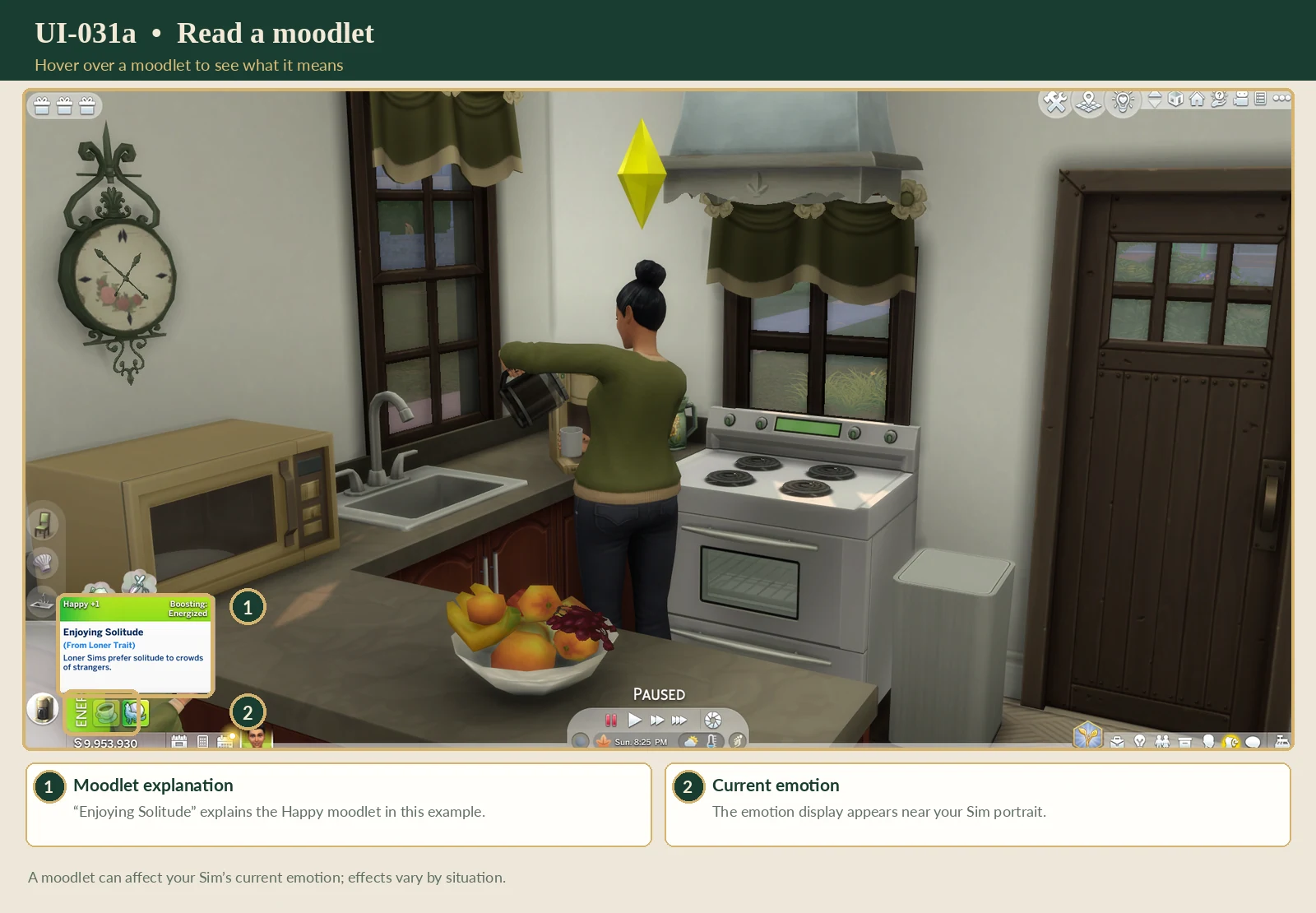
They may result from needs, activities, relationships, surroundings, or events.
Multiple moodlets can influence the same Sim at once.
If your Sim feels a particular way, examine their active moodlets to understand what might be causing it.
Not every emotion needs to be changed immediately. Emotions are a normal part of your Sim's story.
However, very intense negative emotions can have serious consequences, so monitor your Sim's condition.
PART SIX
A simple routine can help prevent several needs from becoming low at once.
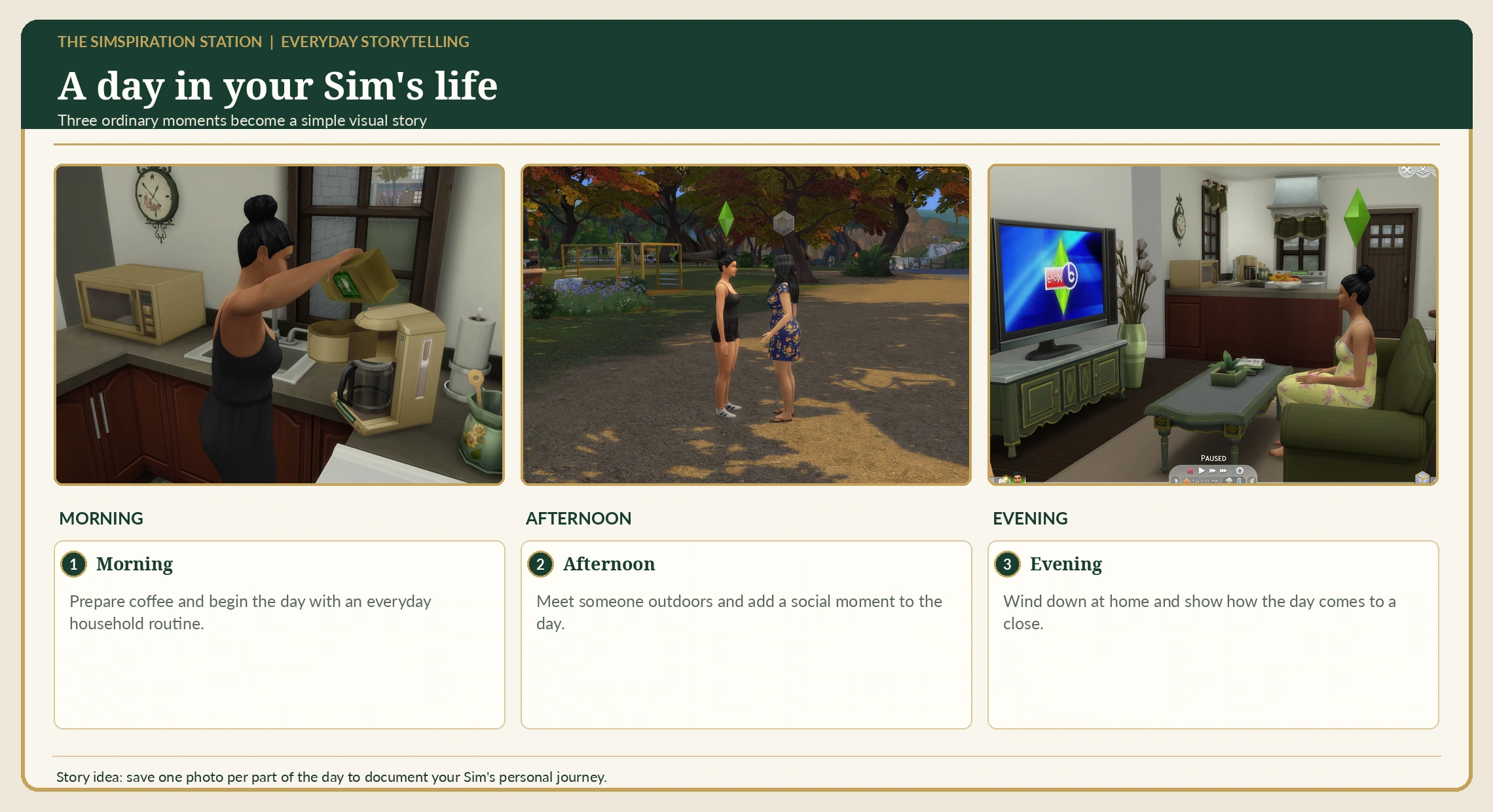
Use the bathroom, shower, eat breakfast, and prepare for the day.
Attend work or school, develop skills, or explore the neighborhood.
Enjoy dinner, socialize, complete hobbies, and relax before bed.
Give your Sim enough time to sleep and restore Energy.
Your Sim's schedule will depend on their career, household, and activities.
This routine is a starting suggestion, not a rule you must follow.
Look for the most urgent problems rather than following a fixed order.
Critically low Hunger requires prompt attention. A Sim who desperately needs the toilet or is about to pass out also needs immediate care.
Once urgent problems are handled, focus on restoring comfort, social connection, and enjoyment.
PART SEVEN
Sims can perform certain activities without direct player instructions.
This behavior is called Autonomy.
Autonomy settings can be adjusted through Game Options. The available settings affect how independently Sims behave.
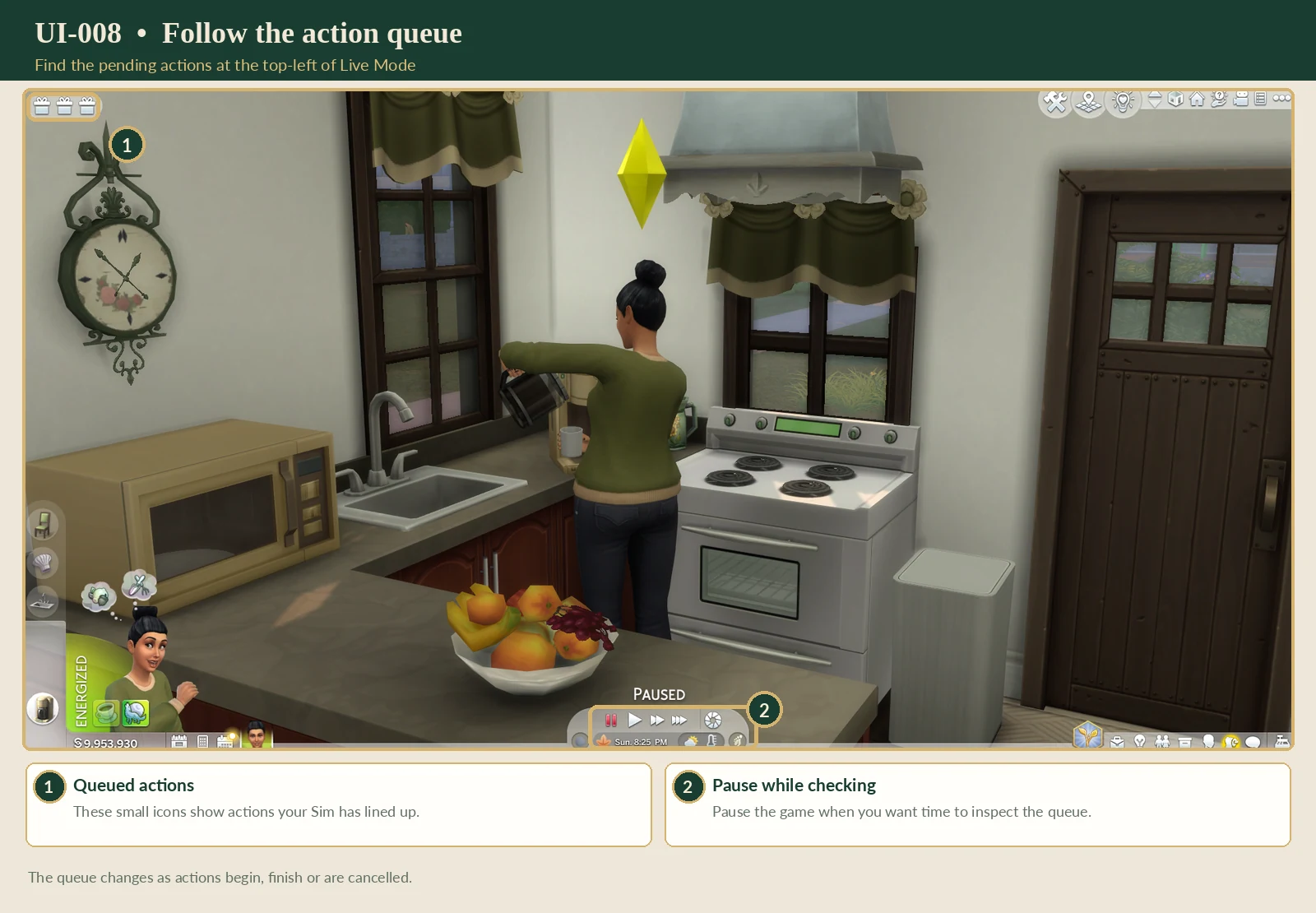
When you give your Sim several instructions, these actions appear in their interaction queue.
You can add activities and cancel unwanted queued actions.
Try pausing the game before organizing several activities. This gives you time to check needs and plan what to do next.
Some queued actions may be interrupted by urgent needs or other events. A long queue is not always the most efficient approach.
PART EIGHT
Not always. Infants, toddlers, and Sims with special life states can have different care requirements.
Infants and toddlers need age-appropriate assistance, especially with feeding, hygiene, sleep, and comfort.
Some expansion and game packs introduce supernatural Sims with specialized needs.
Standard human Sims, core needs, emotions, moodlets, and everyday household management.
Some packs add new life states, care interactions, or specialized needs.
This beginner guide focuses on the six standard needs of ordinary Teen and older human Sims.
PART NINE
Practice what you've learned with a simple Base Game activity.
Your Sim is settling into a new home. Help them enjoy one comfortable day while learning to balance their everyday needs.
Choose one special moment from your Sim's day and write a short journal entry about it.
There is no required score or time limit. This is simply a way to become comfortable with daily gameplay.
For more help understanding needs, moods, and emotions in The Sims 4, explore EA's official support resources.
Additional information is supported by official Electronic Arts resources.
EA's The Sims 4 Help Center ↗ EA's October 2026 Game Update ↗Research reviewed: November 2026.
A LITTLE CARE GOES A LONG WAY
Now that you understand needs and emotions, you're ready to explore more of your Sim's everyday life.
← Return to the Beginner's Guide